


Electronic Arts has revealed a sweeping restructuring plan that could permanently reshape one of gaming’s biggest publishers. Legendary RPG developer BioWare is closing, the next Mass Effect game has been cancelled, and approximately 400 employees are reportedly losing their jobs. Yet while some beloved franchises face an uncertain future, Battlefield, Apex Legends and EA Sports are receiving renewed investment. The message behind EA’s latest strategy is becoming increasingly clear: bigger franchises, fewer projects and a much tighter focus on profitability.
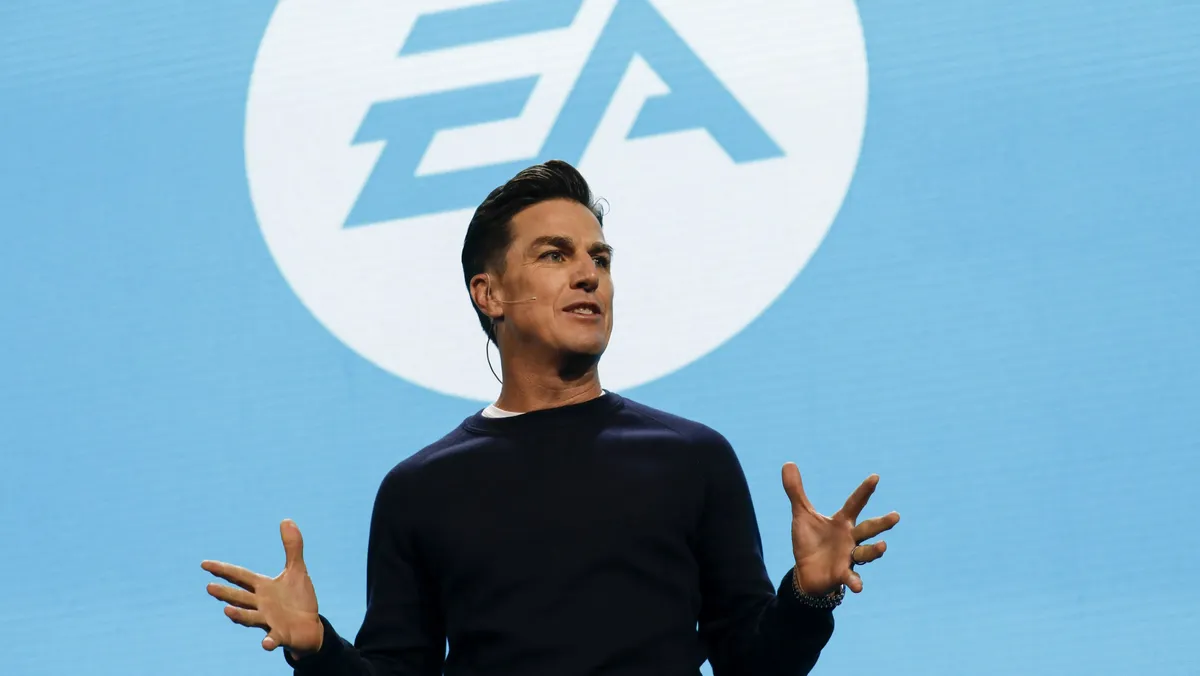
The announcement, made on 21 October 2026, follows EA’s $55 billion takeover by a consortium involving Saudi Arabia’s Public Investment Fund (PIF), Silver Lake and Affinity Partners.
Only months after the acquisition was completed, the company is already making dramatic changes to its development operations.
In an official statement titled Building EA’s Next Chapter, executives Cam Weber and David Tinson outlined a new direction for the publisher, emphasising established franchises and projects with stronger prospects for long-term commercial success.
For players, however, the most immediate consequence is the disappearance of one of the industry’s most influential role-playing game studios.
And BioWare may not be the only casualty of EA’s new priorities.
BioWare closes after more than 30 years — and Mass Effect is cancelled
The biggest shock is undoubtedly the closure of BioWare, the Canadian developer responsible for some of gaming’s most memorable role-playing adventures.
Founded in 1995 and acquired by EA in 2007, BioWare built its reputation on immersive worlds, memorable characters and storylines shaped by player decisions.
Its catalogue includes several landmark franchises:
- Mass Effect: the acclaimed science-fiction RPG series known for its branching storylines, companions and consequential choices.
- Dragon Age: a fantasy franchise combining political conflict, party-based combat and complex character relationships.
- Star Wars: Knights of the Old Republic: one of the most influential Star Wars role-playing games.
- Baldur’s Gate: the classic RPG series that helped establish BioWare’s reputation.
- Neverwinter Nights: a Dungeons & Dragons-inspired RPG celebrated for its custom adventures and multiplayer possibilities.
The studio also developed Anthem, an ambitious online action RPG that struggled commercially.
Although BioWare experienced several difficult years, many fans hoped its next Mass Effect project would mark a return to form.
Those hopes have now suffered a major blow.
What happened to the next Mass Effect game?
According to EA’s official announcement, a small BioWare team had been working on a new Mass Effect title during its early development stages.
The publisher has decided to discontinue that work.
The decision also means the closure of BioWare’s Edmonton studio, ending more than three decades of game development under the company’s name.
EA acknowledged BioWare’s contribution to the RPG genre, but maintained that its revised investment priorities required difficult decisions.
For fans, the cancellation is particularly painful because the next Mass Effect had already been announced and had generated considerable anticipation.
The project was expected to continue one of gaming’s most recognisable science-fiction franchises.
Instead, development has stopped before the game could reach completion.
Importantly, EA has confirmed the cancellation of the game in development, not the permanent retirement of the entire Mass Effect intellectual property.
Whether the series will eventually return under another studio remains unknown.
Around 400 EA employees reportedly affected by layoffs
BioWare’s closure forms part of a much wider restructuring across Electronic Arts.
According to Bloomberg, approximately 400 employees are expected to lose their jobs, representing around 3% of EA’s workforce.
Of those affected, roughly 50 reportedly worked at BioWare.
The official company announcement does not provide a total redundancy figure, although it acknowledges that some decisions will directly affect employees and development teams.
EA says it intends to help affected staff explore alternative positions within the company where possible.
Nevertheless, the reported cuts represent another significant reduction in employment across an industry that has already experienced extensive restructuring in recent years.
Why is EA reducing its workforce?
The publisher argues that competition has intensified and that players now have more choices than ever when deciding how to spend their time and money.
Producing large-scale video games has also become increasingly expensive.
Modern blockbuster releases often demand lengthy development cycles, substantial technical resources and ongoing support after launch.
Under these conditions, EA believes concentrating investment on fewer major projects offers a better opportunity for sustainable growth.
Its newly announced strategy revolves around three priorities:
- Strengthening established franchises: directing more resources towards major games and communities that already have substantial audiences.
- Reaching new markets: expanding across different platforms, business models and international regions.
- Developing new entertainment opportunities: exploring additional experiences connected to gaming, sports and fan engagement.
Although these objectives sound relatively straightforward, their practical implications are substantial.
Some franchises will receive more investment, while others will face delays, smaller teams or outright cancellation.
Which EA games are safe, cancelled or facing changes?
EA’s restructuring affects several major areas of its gaming portfolio.
The company has confirmed that its established sports titles and multiplayer shooters remain central to its business, alongside a smaller number of action-adventure games.
Meanwhile, other projects are being paused or reorganised.
EA’s new development priorities at a glance
| Game or franchise | Current status | What EA has announced |
|---|---|---|
| Mass Effect (next game) | Cancelled | Early development has ended following BioWare’s closure |
| Dragon Age | Uncertain | No new game announced or confirmed |
| Battlefield | Continuing | EA plans further investment in future titles |
| Apex Legends | Expanding | New gameplay modes and experiences planned |
| Respawn and DICE project | In development | Both studios will collaborate on an unnamed project |
| Marvel’s Iron Man | Continuing | Remains a major action-adventure priority |
| Star Wars Jedi (next game) | Continuing | Development remains part of EA’s plans |
| EA Sports FC | Major priority | Continued investment and global expansion |
| Project Gridiron | In development | New American football experience |
| Fight Night | Pre-production | EA plans to revive the boxing franchise |
| The Sims – Project Evergreen | Prioritised | Receives greater development focus |
| The Sims – Project Lotus | Paused | Development has been put on hold |
| skate. | Continuing with changes | Development team will be reduced |
These plans make EA’s preferred direction particularly apparent.
Multiplayer franchises, competitive sports and established intellectual properties have emerged as the main beneficiaries of the restructuring.
Battlefield and Apex Legends emerge as major winners
While RPG fans are dealing with BioWare’s closure, the outlook is considerably more positive for EA’s shooter franchises.
The company has reaffirmed its commitment to Battlefield and Apex Legends, both of which already have substantial player communities.
Following the success of Battlefield 6, EA intends to continue developing the series while applying lessons learned from its launch and ongoing live-service operations.
The publisher is also looking to make better use of its existing technology and development resources.
Respawn and DICE are joining forces on a new game
One of the more interesting announcements involves Respawn Entertainment and DICE.
EA has confirmed that the two studios will collaborate on a future project.
However, the publisher has not revealed the game’s title, setting, release window or specific genre.
Given the studios’ experience with multiplayer shooters, the partnership has naturally generated speculation about what they might create together.
Respawn is best known for projects including Apex Legends, Titanfall and the recent Star Wars Jedi games.
DICE has an extensive history with the Battlefield franchise and previously worked on Star Wars Battlefront.
A collaboration could potentially combine their technical expertise and multiplayer experience.
For now, though, any suggestion that the project is Battlefield, Titanfall or Star Wars Battlefront 3 remains unconfirmed.
Apex Legends will receive new gameplay experiences
EA has also outlined further investment in Apex Legends over the coming years.
Rather than simply maintaining the existing game, the company wants to expand its universe through additional multiplayer modes and new experiences.
The objective appears to be increasing engagement among existing players while attracting new audiences.
For a free-to-play title that depends heavily on regular updates and community participation, continued investment is essential.
EA clearly considers Apex an important part of its long-term business.
Marvel’s Iron Man and Star Wars Jedi survive the cuts
There is some welcome news for players who prefer single-player adventures.
EA has confirmed that both Marvel’s Iron Man and the next Star Wars Jedi game remain in development.
These projects represent the publisher’s continued interest in large-scale narrative action-adventure experiences.
However, the wider strategy for the genre is changing.
Instead of maintaining numerous expensive projects simultaneously, EA intends to concentrate its resources on a smaller selection of titles.
This could result in more development support for the games that survive, but fewer opportunities for experimental or less-established concepts.
What does this mean for future single-player games?
EA has not announced a complete withdrawal from single-player development.
The continued existence of Iron Man and Star Wars Jedi demonstrates that the company still sees commercial value in the genre.
Nevertheless, its latest statement suggests a more selective approach.
Projects will likely face greater scrutiny before receiving substantial funding, particularly when they require large budgets and extended development periods.
For studios attempting to establish new franchises, the environment could become increasingly challenging.
Successful existing properties appear to have a clear advantage.
EA Sports remains central to the publisher’s future
If there is one division that appears particularly well-positioned under EA’s new strategy, it is EA Sports.
The company has reaffirmed its commitment to the EA Sports FC franchise and the broader portfolio of sporting experiences.
Football remains one of EA’s most important global markets, supported by annual releases, online competition and extensive licensing partnerships.
That commercial strength makes EA Sports a natural area for continued investment.
But the publisher is not limiting its ambitions to traditional football games.
Project Gridiron: a new open-world American football experience
EA has revealed a new project currently operating under the codename Project Gridiron.
Described as a social-first, open-world American football experience, the game appears designed to approach the sport differently from conventional simulation titles.
Rather than simply reproducing matches and competitions, the concept suggests a greater emphasis on social interaction and shared activities.
However, EA has yet to reveal detailed gameplay footage, a release date or supported platforms.
The project remains an intriguing addition to the company’s sports portfolio.
Fight Night is finally making a comeback
Another noteworthy announcement concerns the return of Fight Night.
EA has confirmed that a revival of its boxing franchise is in pre-production, using capabilities from its existing fighting simulation teams.
For long-time fans, this is an encouraging development.
Fight Night has been absent from the market for years, and players have repeatedly expressed interest in seeing the series return.
However, pre-production is an early stage of development.
EA has not confirmed a launch window, gameplay features or whether the new title will follow the structure of previous releases.
The announcement is therefore a statement of intent rather than a guarantee that a new Fight Night game will arrive soon.
The Sims continues, but Project Lotus is put on hold
The restructuring also affects EA’s lifestyle games.
The company has confirmed that The Sims remains an important franchise, but not every project within its development pipeline will continue as originally planned.
Two internal initiatives are specifically mentioned: Project Evergreen and Project Lotus.
EA intends to concentrate on Project Evergreen while pausing development of Project Lotus.
The publisher says this decision will allow developers to devote more time and resources to achieving the long-term vision for Evergreen.
Has The Sims 5 been cancelled?
Not exactly.
Although Project Lotus has been associated with speculation about the future of The Sims, EA has not officially described it as The Sims 5 in this announcement.
The company has also used the word paused, rather than permanently cancelled, when referring to Lotus.
That distinction matters.
Development could potentially resume in the future, although there is currently no commitment to doing so.
Players should therefore avoid interpreting the announcement as confirmation that a numbered fifth Sims game has been cancelled.
What is clear is that EA is narrowing its immediate development priorities within The Sims franchise.
skate. survives, but its development team is being reduced
The free-to-play skateboarding game skate. will continue receiving support.
However, its development team will become smaller.
EA says the title has successfully attracted players but needs to improve long-term engagement.
The restructuring is intended to create a more focused development team working towards a clearer roadmap.
For fans, this presents a mixed picture.
The game itself is not being discontinued, but the reduction in staff could influence the pace and scope of future updates.
EA has not provided detailed information about exactly how development schedules will change.
As with several other decisions in the announcement, the stated objective is to create a more sustainable business.
How the $55 billion Saudi-backed takeover fits into EA’s new strategy
The timing of these changes is particularly significant.
On 4 August 2026, Electronic Arts completed its $55 billion acquisition by an investment consortium comprising Saudi Arabia’s Public Investment Fund, Silver Lake and Affinity Partners.
The transaction took EA private, ending its time as a publicly traded company.
A little over two months later, the publisher has announced a substantial restructuring involving studio closures, project changes and reported redundancies.
That sequence of events has naturally raised questions about the priorities of EA’s new ownership structure.
Large acquisitions frequently bring renewed scrutiny of operating costs, investment decisions and long-term financial performance.
EA’s latest announcement places considerable emphasis on concentrating resources where management believes they can deliver the strongest results.
However, the company has not explicitly attributed BioWare’s closure or the reported layoffs to a direct instruction from the new owners.
It is therefore important to distinguish the confirmed restructuring from assumptions about precisely who initiated individual decisions.
A smaller portfolio with bigger commercial expectations
The broader direction is nevertheless becoming clearer.
EA appears increasingly determined to maximise the value of its largest existing franchises rather than spread investment across a wider collection of studios and projects.
There are potential advantages to this strategy.
Larger teams and more focused budgets could improve development efficiency and provide established games with stronger long-term support.
But there are also risks.
A publisher that becomes heavily dependent on a relatively small number of blockbuster properties may find it harder to develop the next major original franchise.
Innovation often involves uncertainty, and some of gaming’s most influential titles began as ambitious ideas without guaranteed commercial success.
BioWare’s history provides a particularly striking example.
Why BioWare’s closure matters beyond Mass Effect
The end of BioWare is not simply another studio shutdown.
For more than three decades, the developer helped shape expectations about storytelling in video games.
Its RPGs demonstrated how character relationships, moral decisions and branching narratives could make players feel personally involved in fictional worlds.
The influence of titles such as Baldur’s Gate, Knights of the Old Republic and Mass Effect extends far beyond their original audiences.
Numerous modern role-playing games build upon design principles that BioWare helped popularise.
Its closure therefore represents more than the cancellation of a single project.
It also marks the disappearance of a studio identity closely associated with a particular approach to interactive storytelling.
EA may continue to own the intellectual properties, but recreating the creative culture behind those games is a much more complicated challenge.
Who is leading EA’s restructuring?
The internal announcement was signed by Cam Weber and David Tinson, two senior executives who were given expanded responsibilities as EA entered its new ownership era.
Weber serves as president and chief studios officer, overseeing major development organisations and franchise operations.
Tinson holds the position of president and chief operating officer.
Their involvement reflects the operational focus of the restructuring, which involves decisions about studios, resources and the overall development portfolio.
Notably, the announcement did not carry the signature of Andrew Wilson.
That omission does not indicate a change in EA’s chief executive position.
Wilson remains the company’s chairman and CEO, having continued in that role following the completion of the acquisition.
What happens next for EA and its biggest franchises?
EA’s latest announcement leaves several important questions unanswered.
While the publisher has clearly identified its preferred investment areas, many details about future games remain undisclosed.
Players will be watching for further information about several projects:
- Battlefield: what direction will the next instalment take following Battlefield 6?
- Respawn and DICE: what game are the two studios developing together?
- Apex Legends: which new modes and experiences will expand the franchise?
- Star Wars Jedi: when will the next adventure arrive?
- Marvel’s Iron Man: how is development progressing?
- Fight Night: when will EA reveal more about its boxing revival?
- The Sims: what exactly is Project Evergreen, and could Project Lotus eventually return?
- Mass Effect: will EA ever revive the franchise without BioWare?
EA has indicated that further discussions about its direction will take place at an internal company meeting in November 2026.
Whether those discussions produce additional public announcements remains to be seen.
For employees affected by the restructuring, however, the consequences are already immediate.
EA’s future is becoming clearer — and not everyone will like it
Electronic Arts is entering a new phase in which established franchises and predictable commercial opportunities appear to take priority over a broader, more experimental development portfolio.
Battlefield, Apex Legends and EA Sports are firmly positioned within the company’s plans.
Marvel’s Iron Man and Star Wars Jedi remain important upcoming releases, while Fight Night and Project Gridiron demonstrate continued investment in sports entertainment.
Elsewhere, the outlook is considerably less reassuring.
BioWare is closing, the next Mass Effect has been cancelled, Project Lotus has been paused and the team behind skate. is being reduced.
Combined with reports of approximately 400 job losses, these changes illustrate the human and creative consequences of EA’s restructuring.
The biggest question is no longer whether EA can keep producing successful games. It is whether a company increasingly focused on its safest franchises can still create the unexpected breakthroughs that once helped define the gaming industry.
For now, the message is unmistakable: shooters and sport are at the heart of EA’s future, while everything else faces a much tougher test.